
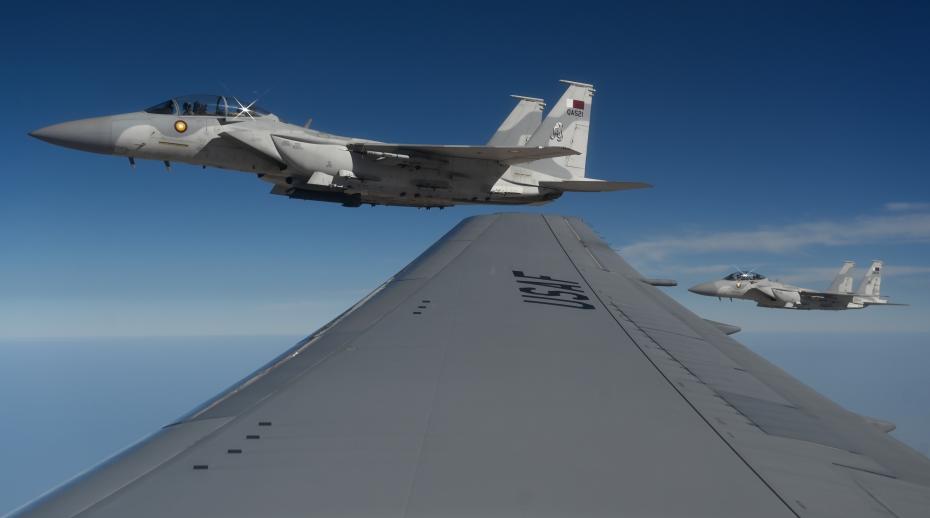
The Middle East has long been one of the regions importing the largest volumes of major arms. SIPRI’s latest data on international arms transfers shows that the Middle East accounted for more than a quarter (27 per cent) of global arms imports in 2020–24. North Africa accounted for another 2.2 per cent.
The Middle East and North Africa are interconnected geographically, historically and militarily. They are also impacted by and influence regional conflicts and security dynamics. Hence analysts often treat the Middle East and North Africa (MENA) as a single region. This topical backgrounder unpacks recent trends in international arms transfers in MENA.
The backgrounder first looks at overall regional trends. It then focuses on the largest importers, with a particular focus on the Gulf Cooperation Council (GCC) states of Qatar, Saudi Arabia, Kuwait, Bahrain and the United Arab Emirates. It also sheds light on recent trends in arms imports by three other major regional players—Israel, Iran and Egypt—and the two top importers in North Africa: Algeria and Morocco. Finally, although MENA is a net importer of arms, the backgrounder examines the growing role of a handful of Middle Eastern states as arms exporters.

SIPRI Topical Backgrounder, Authored by Zain Hussain and Alaa Tartir, Stockholm International Peace Research Institute (SIPRI), April 2024
 Alaa Tartir, Program Director of Al-Shabaka, Engaged Scholar, Global Citizen